
For decades, Earth’s twin lived only in imagination. Now, it lives in data.
Astronomers have identified a planet 146 light-years from Earth that comes closer than ever before to resembling our own world. It’s rocky. It’s temperate. And most importantly—it sits in a region where life as we understand it could exist. This is not a cinematic fantasy anymore. This is astronomy rewriting reality.
A Discovery That Redefines “Earth-Like”

This planet wasn’t flagged because it’s large or dramatic—but because it’s familiar.
🪐 Rocky composition, not gaseous
📏 Near-Earth size, avoiding crushing gravity
☀️ Orbits a stable star, reducing violent radiation swings
🌍 Positioned in the habitable zone, where liquid water is possible
In planetary science, these conditions are rare together. Individually, they’re impressive. Collectively, they’re astonishing.
Why the Distance Matters More Than You Think
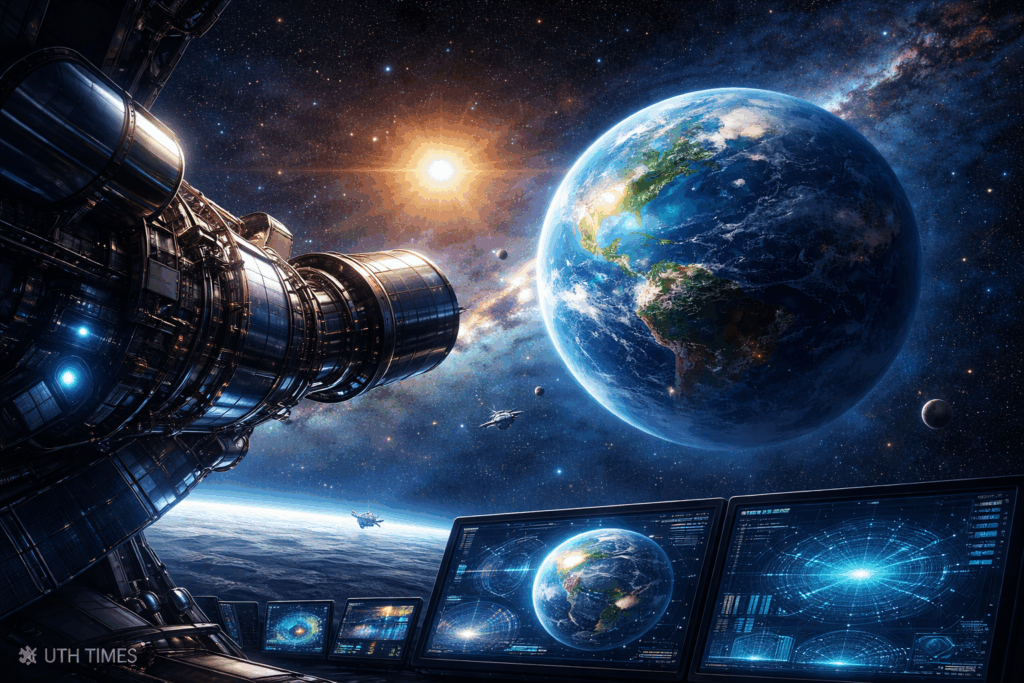
At 146 light-years, this planet is relatively close on a cosmic scale.
🚀 Close enough for advanced telescope analysis
📡 Reachable for detailed atmospheric studies
🔬 A prime candidate for biosignature detection
This proximity allows scientists to go beyond discovery and into character study—analyzing how the planet behaves, breathes, and evolves.
The Atmosphere: Where the Real Story Begins
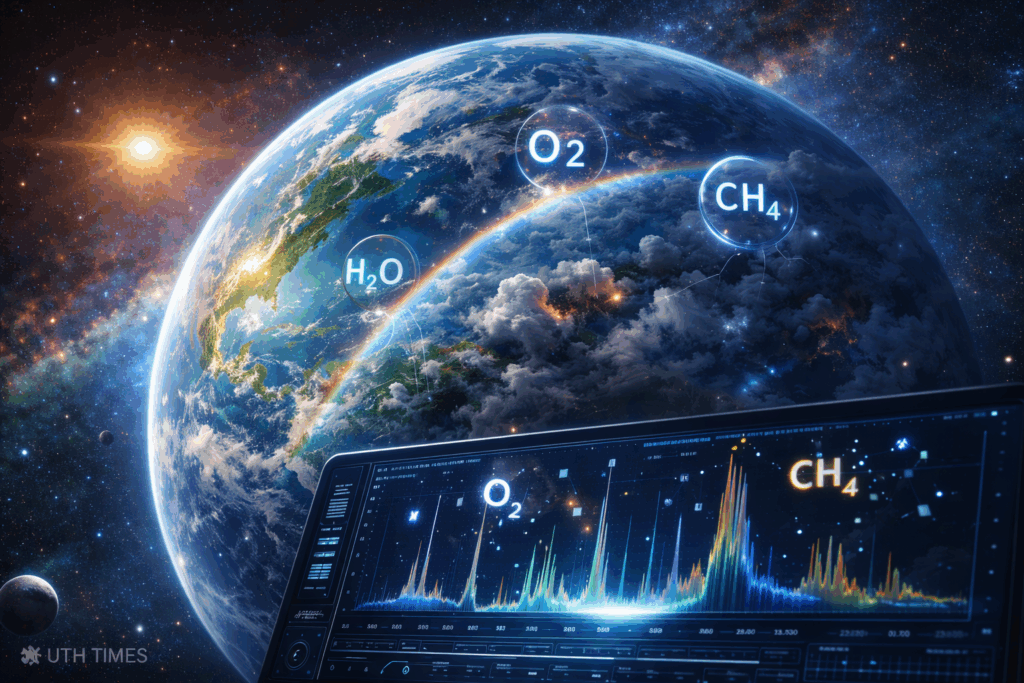
Atmospheres tell truths surfaces cannot.
🫁 Early signals hint at complex chemistry
💧 Molecules associated with water cycles may be present
🧪 Certain gases observed on Earth are strongly tied to biological activity
No one is claiming confirmed life—but scientists agree on one thing:
If life exists elsewhere, this is exactly where it would start.
Not Just Habitable—Potentially Stable
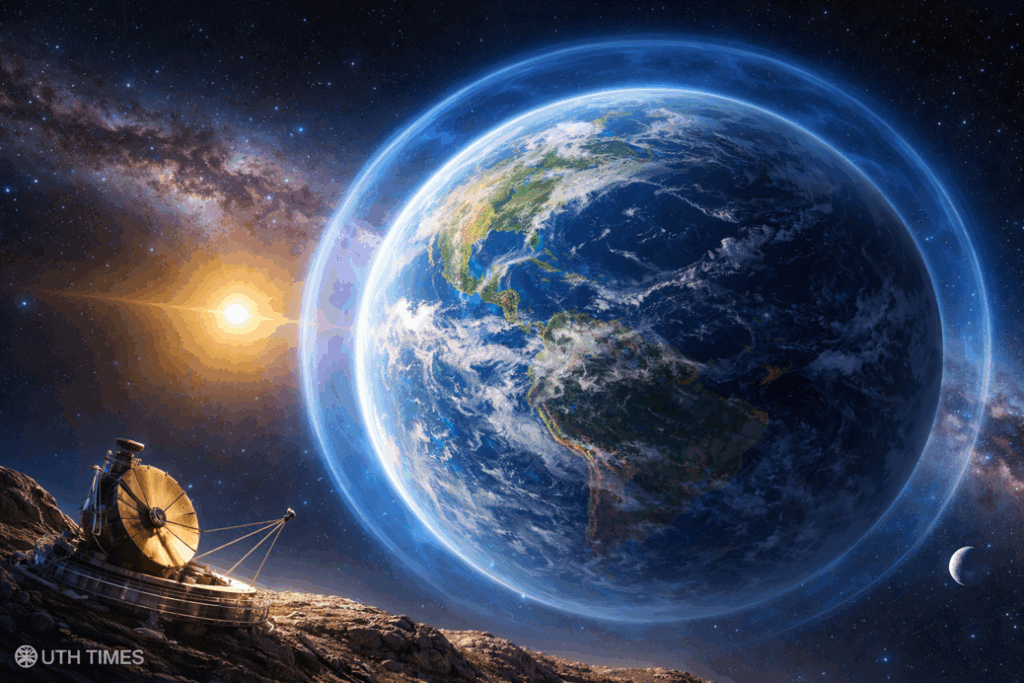
Many planets pass through habitable phases briefly. This one appears different.
🧲 Possible magnetic shielding to protect the surface
🌡️ Climate models suggest long-term temperature balance
⏳ Its star’s age hints at billions of years of stability
That time factor matters. Life doesn’t rush—it accumulates.
This planet has moved to the top of the global observation list.
📡 Next-generation telescopes will scan its atmosphere
🌊 Scientists will search for signs of oceans or clouds
🔍 Every data point will be cross-checked for one question only: Are we alone? We didn’t find life. But we found a mirror. And mirrors have a way of changing how you see yourself.

