
In the 14th century, Udupi did not roar with armies nor glitter with royal walls — yet it carried a presence more powerful than any fort: the living ritual of Krishna. What happened on one silent night would carve itself into spiritual memory, though history barely whispers of it.
🕉️ Udupi in the Shadow of the Sultanate
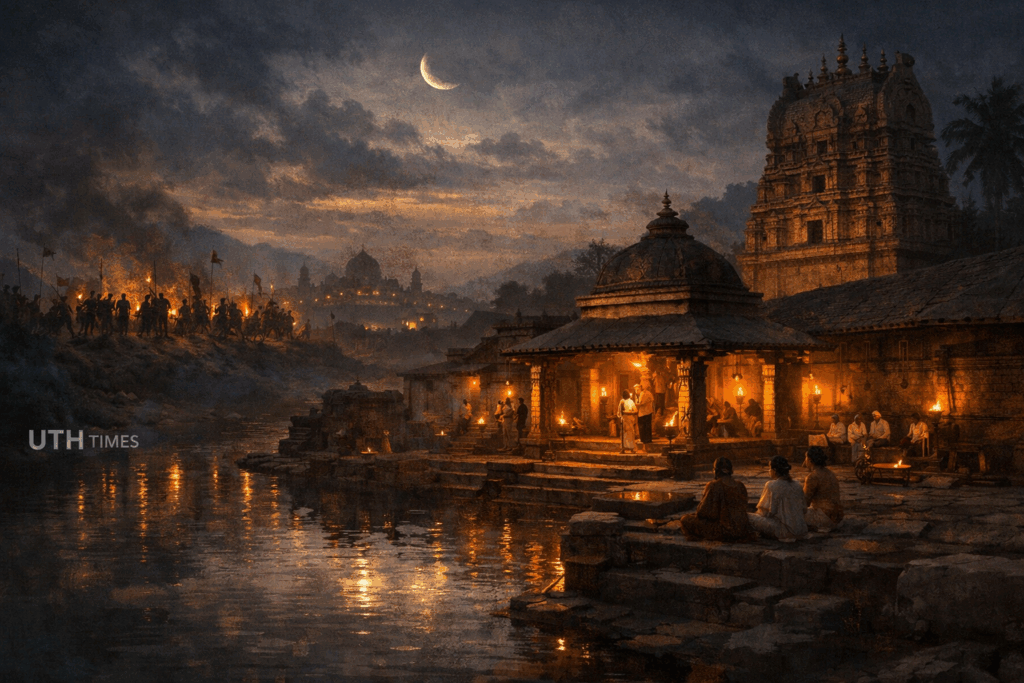
Between 1320–1340 CE, the empire of Muhammad bin Tughlaq extended toward the Konkan and western coast. Unlike capital cities, Udupi held no political value — but it held something greater: a rhythm of worship.
The Ananteshwar–Krishna temple complex was not merely stone — it was continuity.
But continuity is fragile. Armies didn’t always destroy — sometimes they interrupted. A single disruption could rupture centuries of seva.
🧱 The Madhvas See the Pattern
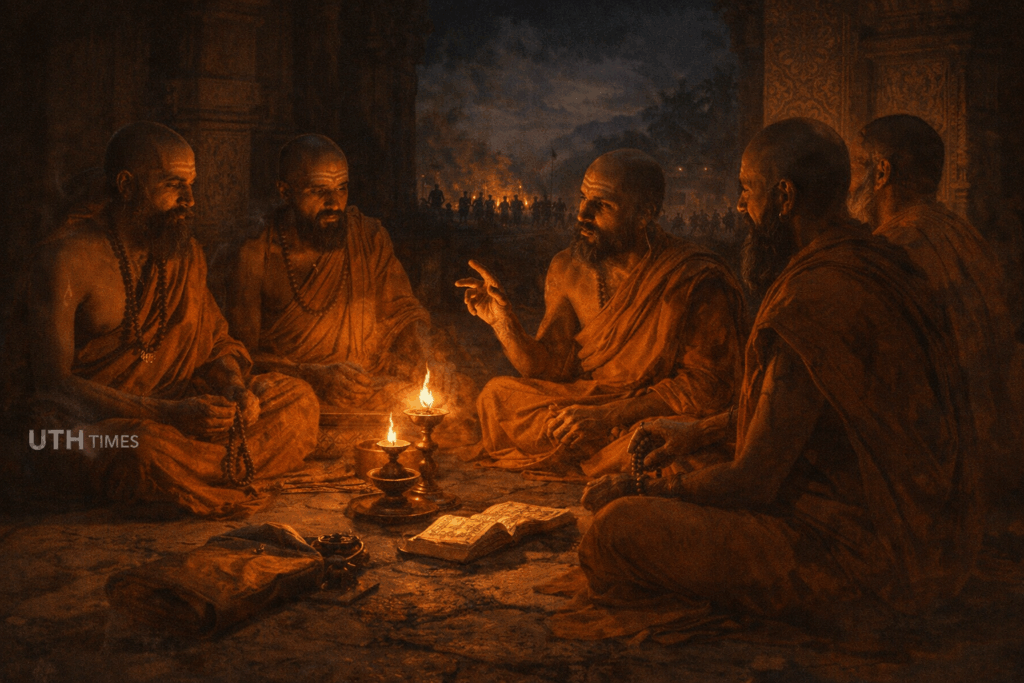
The Madhva saints and priests, custodians of the Dvaita tradition, understood one thing:
🟡 Power attacks visibility.
🟡 Ritual survives through predictability.
🟡 To protect God, you remove Him from sight.
They realized they could not defend with swords.
They could only defend with strategy — withdrawal instead of confrontation.
🚪 The Night of Enclosure — When Stone Became Armour
There was no shankha.
No torchlit procession.
No scribes recording the act.
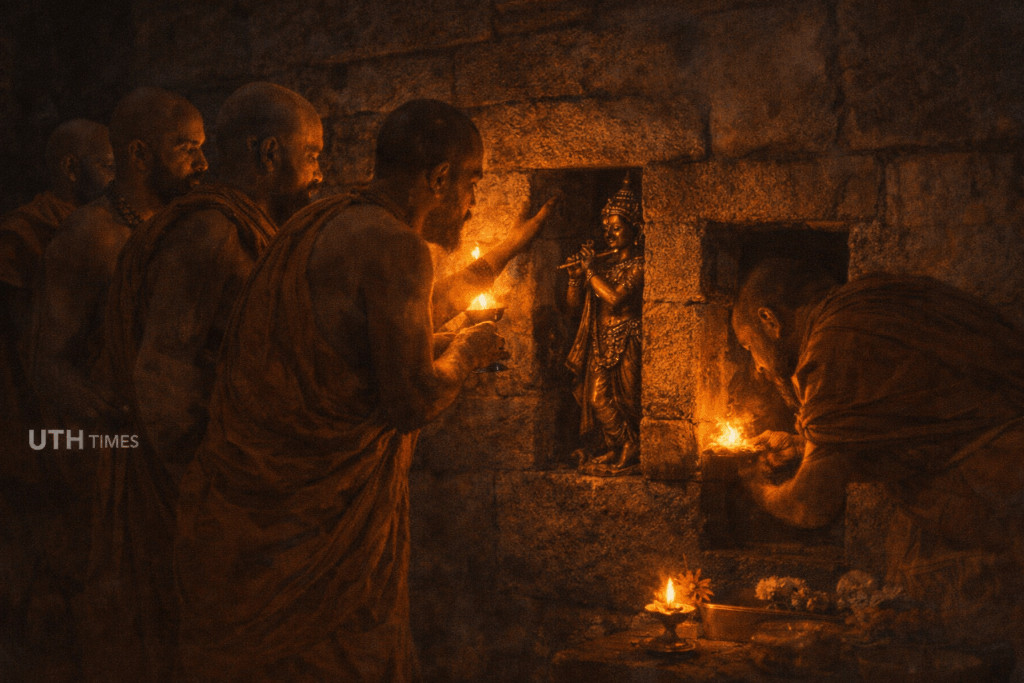
➡️ Under cover of darkness, the murti of Lord Krishna was lifted.
➡️ It was placed inside the thickness of a temple wall — entombed, not as death, but as preservation.
➡️ A narrow aperture — just enough for a priest’s hand — became the lifeline of seva.
From that moment:
✨ No darshan
✨ No festival calendar
✨ No public ritual
But the daily offering continued.
Inside stone, Krishna breathed — through ritual, not spectacle.
🕌 When Power Arrived, It Saw Nothing
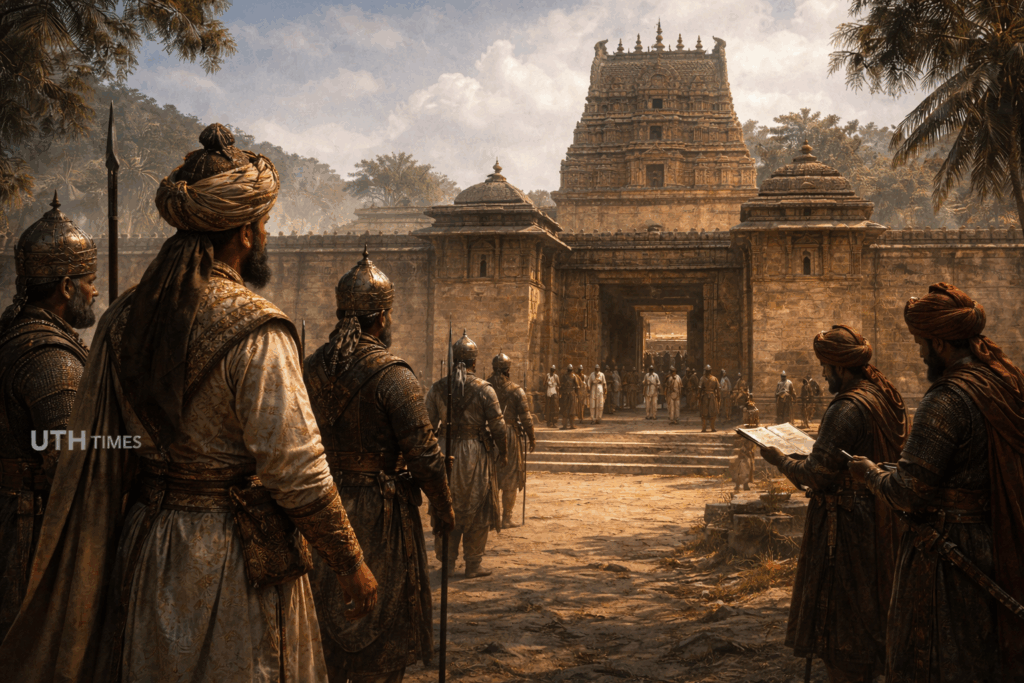
When Sultanate officers reached Udupi, they found:
🪨 Temples intact
🪨 Walls high
🪨 Compliance visible
Their registers marked Udupi: “subdued.”
But they never saw what was missing — not absence, but concealment.
🌅 Return Without Announcement
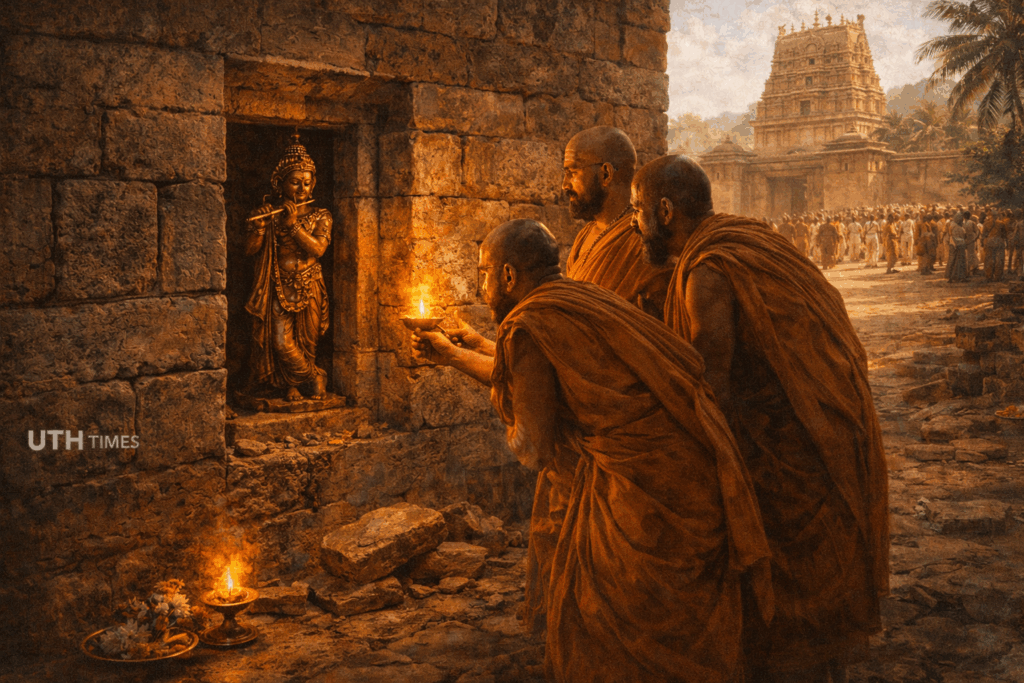
Years later, when threat faded, the wall was reopened.
No reinstallation.
No triumphant decree.
Because — that which never broke does not need rebuilding.
Sampradaya remembers not events — but sequences.
History remembers battles — but not the quiet that saved God.
Udupi’s miracle is not divine escape.
It is strategic devotion — worship made into a shield.

