
🔍 Unearthing a Mystery from the Past
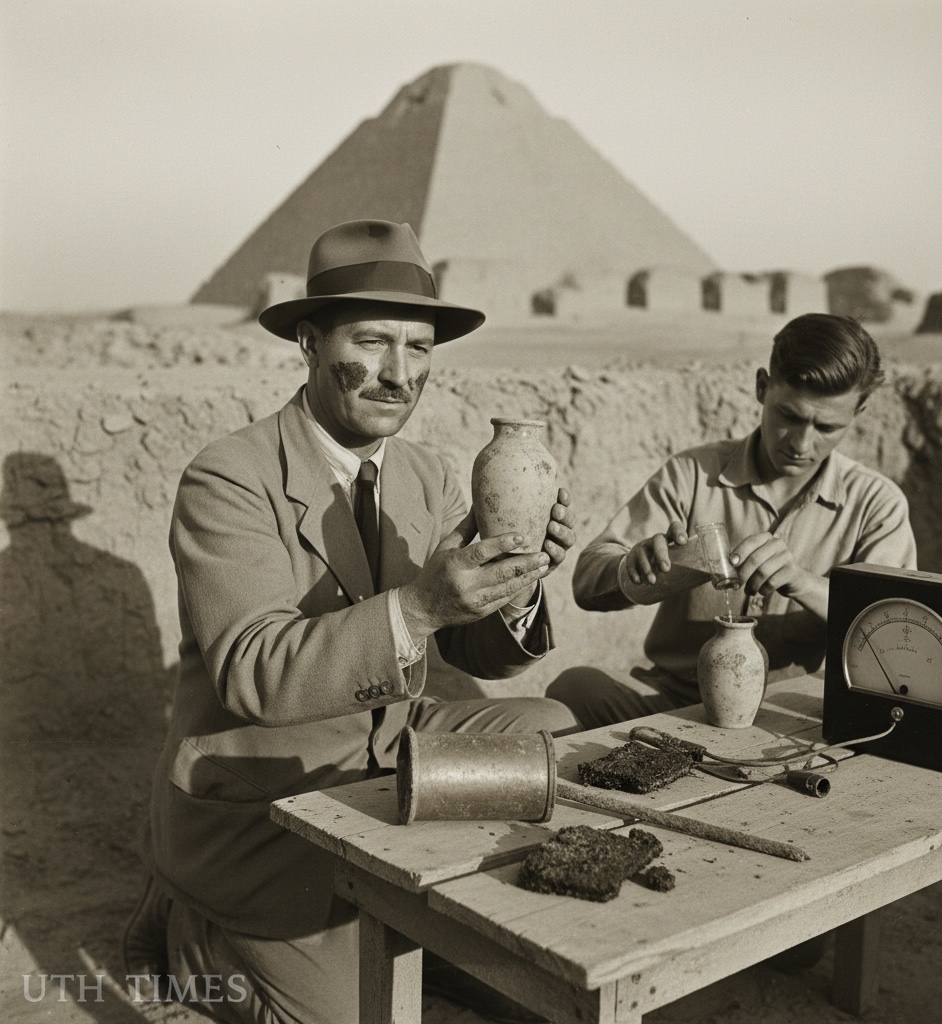
In 1938, German archaeologist Wilhelm König stumbled upon something extraordinary near Baghdad — a small clay jar that didn’t fit neatly into any known ancient category. Inside the jar was a copper cylinder, sealed with asphalt, encasing an iron rod. The artifact, now famously known as the Baghdad Battery, dated back nearly 2,000 years — possibly to the Parthian or Sassanid periods.
When researchers reconstructed it and poured in an acidic liquid such as vinegar or lemon juice, the jar astonishingly produced a small electric current. This simple clay pot suddenly hinted at the possibility that ancient civilizations may have mastered the principles of electricity long before Benjamin Franklin ever flew his kite.
⚙️ How It Worked: An Ancient Power Source

The design was surprisingly advanced for its time. The copper cylinder acted as a cathode, while the iron rod functioned as an anode — essentially the same structure modern batteries use. When filled with an electrolyte like vinegar, a chemical reaction occurred, releasing a charge of around 1 volt.
But the real question is — why would ancient people need electricity? There’s no record of electrical devices or wiring from that period. Yet several theories have emerged over the decades.
🏺 Theories Behind the Spark

Some historians suggest the Baghdad Battery may have been used for electroplating — a process of coating metals with gold or silver using electrical current. This could explain the fine gilding seen on ancient artifacts that would otherwise be difficult to achieve with primitive tools.
Others argue it might have been used for medical or ritualistic purposes, perhaps delivering mild electric shocks as part of ancient healing or spiritual practices. A few skeptics, however, maintain that the jar was simply a storage vessel, and the “battery effect” was accidental.
⚡ A Shock from the Past
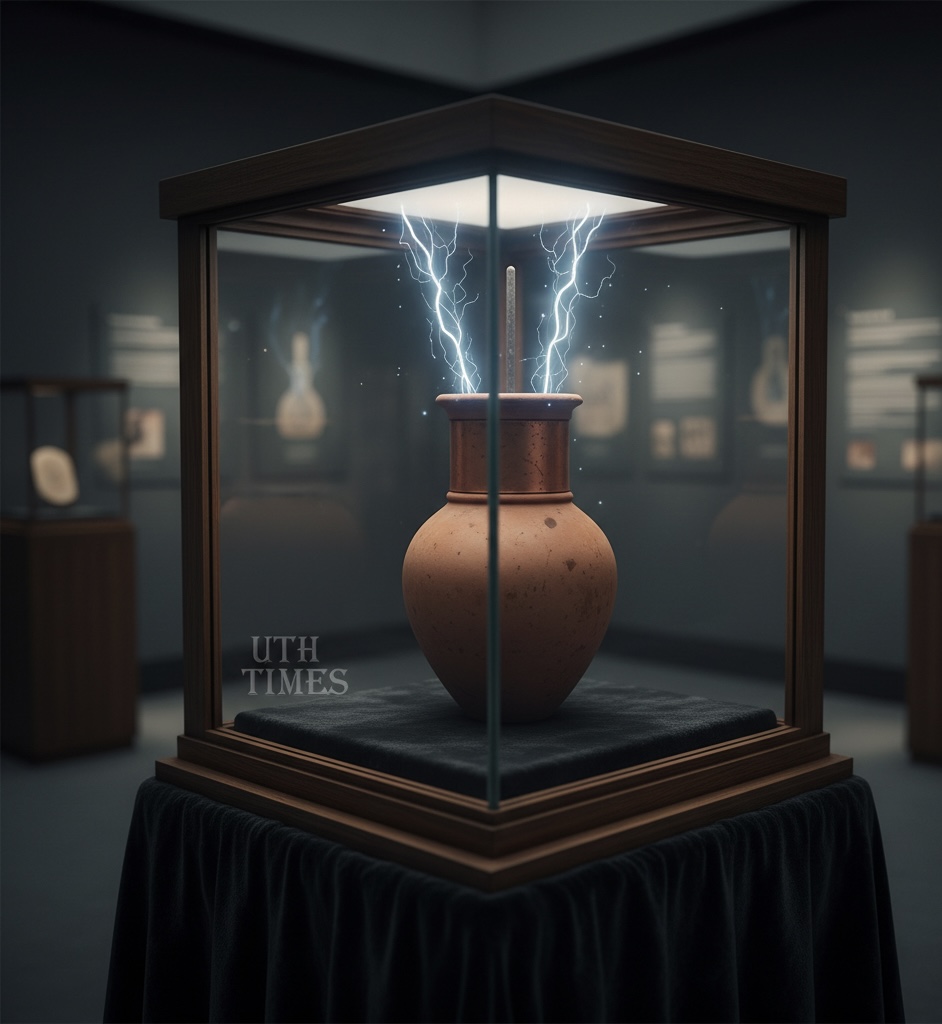
Whether it was a scientific tool or a coincidence, the Baghdad Battery continues to electrify the imagination of historians, scientists, and curious minds alike. Its simple yet sophisticated design challenges our understanding of what ancient civilizations were capable of achieving. Could it be that long before the modern world discovered electricity, our ancestors had already tapped into its mysterious power?
The artifact stands as a silent riddle — a clay vessel that bridges myth and science, hinting that innovation is not just a product of modernity but a timeless human instinct. Even today, replicas of the Baghdad Battery continue to generate sparks in laboratories and museums, reminding us that history might still be hiding secrets more advanced than we dare to believe. ⚡

