
The Cosmic Curtain Call
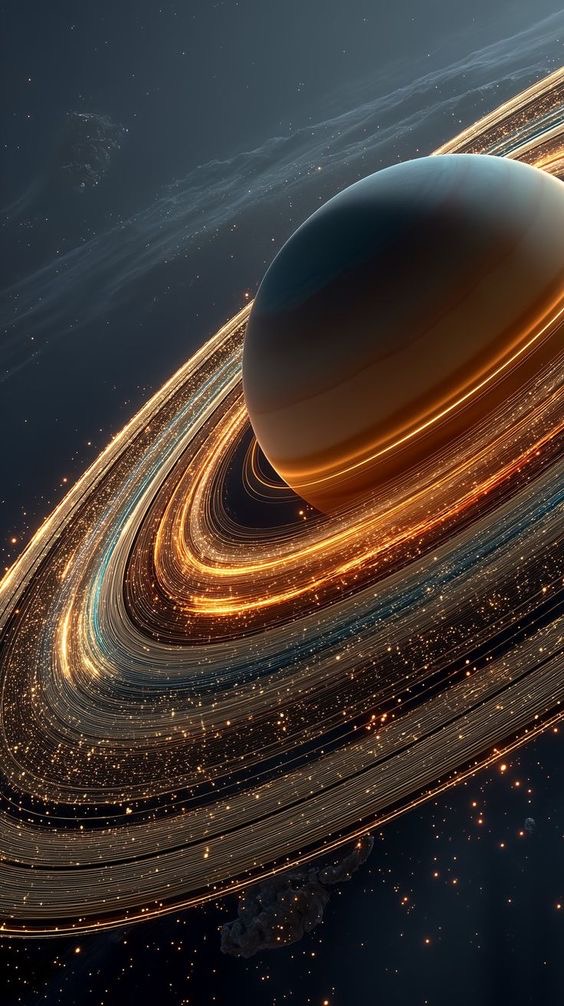
Saturn — the jewel of our solar system, crowned with dazzling rings — is slowly losing its most iconic feature. For centuries, the planet’s shimmering halo of ice and rock has fascinated astronomers and inspired poets. But a 2018 NASA-backed study revealed a startling truth: Saturn’s rings are not eternal. Instead, they’re vanishing far quicker than scientists had imagined.
🌌 What Are Saturn’s Rings Made Of?
- Saturn’s rings are composed of billions of icy particles, ranging from microscopic dust to boulders the size of mountains.
- They orbit the planet in an intricate ballet, held in place by Saturn’s gravity.
- Despite their grandeur, the rings are surprisingly thin — just a few hundred meters thick in some places, but spanning more than 175,000 miles in diameter.
They look solid from afar, but up close, the rings are more like a cosmic snowstorm frozen in motion.
🌀 Why Are the Rings Disappearing?
Astronomers discovered as far back as the 1980s that Saturn is slowly “raining” its rings into the planet’s atmosphere. The culprit?
- Gravity & Magnetic Field: Saturn’s magnetic field pulls in the ring particles.
- Water Ice Fallout: Tiny icy grains collide, producing a rain of electrically charged water particles that spiral down into Saturn.
- Constant Loss: Observations show that the planet loses up to 10 tons of ring material every second.
This process, known as “ring rain,” acts like a slow erosion, gradually draining Saturn’s crown.
⏳ How Long Do the Rings Have Left?
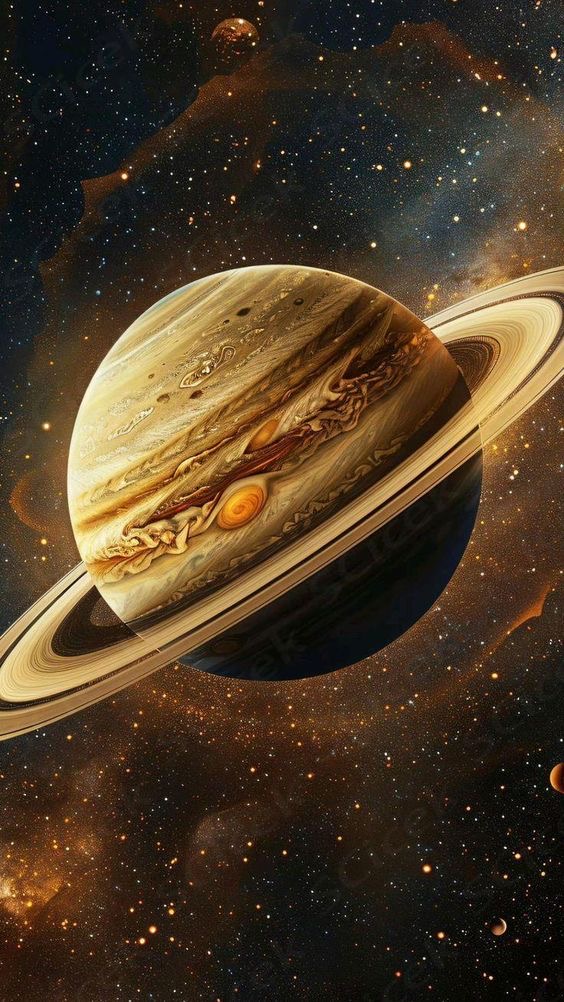
According to the 2018 Icarus study, Saturn’s rings could disappear in 100–300 million years. On a human scale, that sounds eternal. But in cosmic time, it’s shockingly short.
- The solar system is 4.5 billion years old.
- Saturn itself is expected to live for billions more.
- In that grand timeline, losing its rings in just a few hundred million years is like watching fireworks fizzle out moments after they’ve been lit.
To put it in perspective: the rings could be gone in about the same amount of time that has passed since dinosaurs roamed Earth.
🔭 Why Does This Matter?
- Saturn’s rings are a cosmic laboratory, helping us understand planetary formation.
- Studying their decay teaches us about the evolution of other ringed planets (like Uranus and Neptune).
- It also gives scientists clues about how moons, asteroids, and planets interact with gravity over billions of years.
In short, the death of Saturn’s rings is not just a spectacle — it’s a lesson in how the universe constantly reshapes itself.
The Final Word
Saturn without its rings may seem unimaginable today. But in the far future, the sixth planet will look like just another gas giant, stripped of its shimmering crown. For us, the beauty lies not only in witnessing the rings but also in knowing we live in the brief window of cosmic history when Saturn wears its most dazzling attire.

