
🔓When the World Failed, Bharat Engineered the Impossible
Long before chemistry had names or the periodic table was imagined, Indian metallurgists were already solving one of the most baffling riddles in metallurgy — how to tame zinc.
While the world watched this mysterious metal vanish into thin air, India had already decoded it. And not in theory — but in practice, at scale, and with brilliance that rivals today’s chemical plants.
⚙️ The Zinc Problem: The Metal That Evaporated Before It Melted
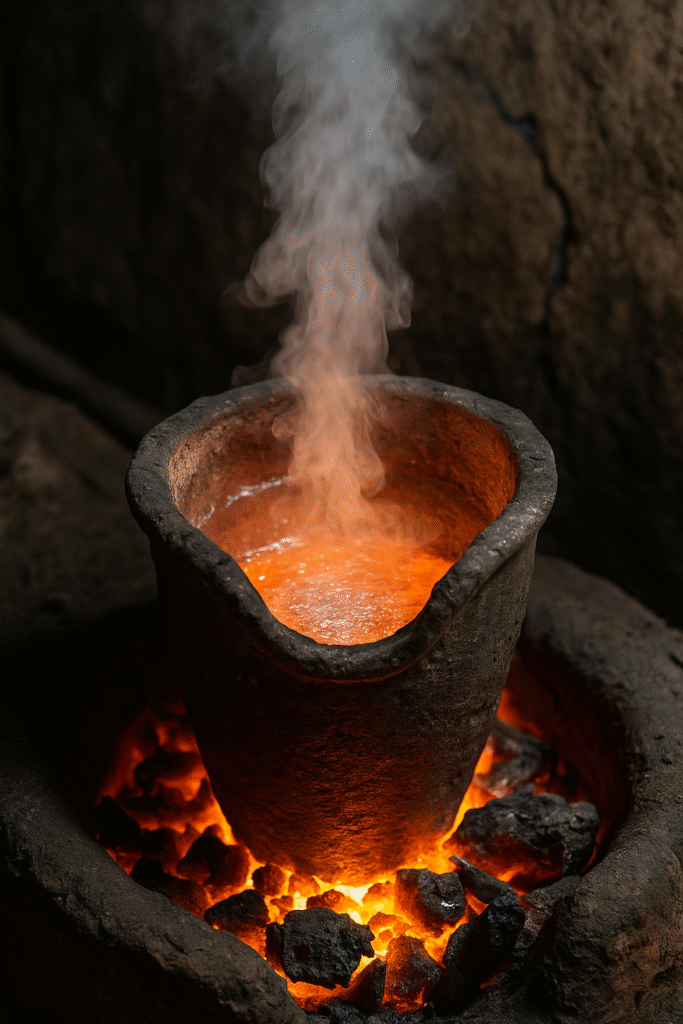
🧪 Zinc isn’t like other metals. It plays hard to get.
- At 419°C, it melts — but by 907°C, it vaporizes into gas.
- Which means: try to extract it, and it disappears.
- Ancient metallurgists from Greece, China, and Persia tried. But every time they heated zinc ore, the metal ghosted them.
- Europe couldn’t crack it until the 16th–17th century — even then, in small batches.
It wasn’t chemistry’s fault. It was the lack of technique. Until India stepped in.
🏺 Zawar, Rajasthan: The Forgotten Industrial Revolution
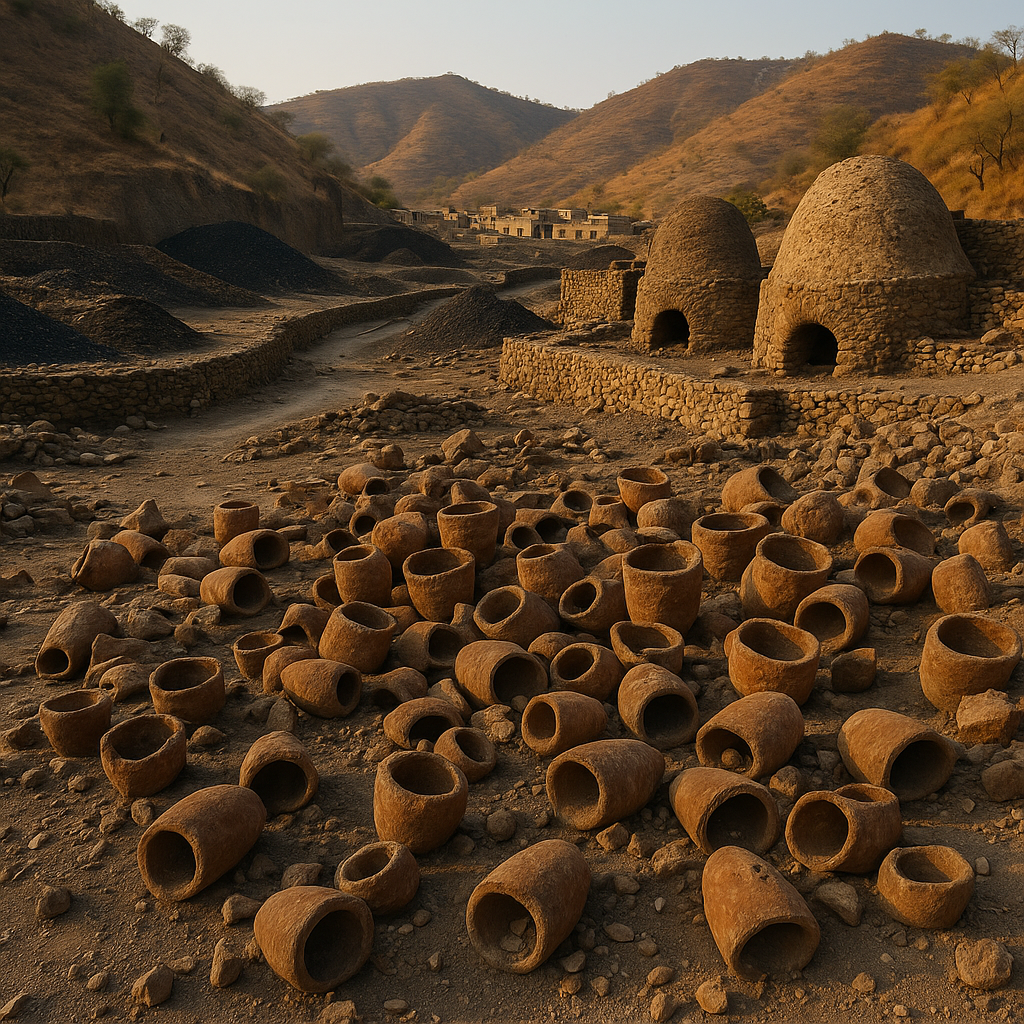
In the heart of Rajasthan, near Udaipur, lies Zawar — a quiet region that once roared with flame, smoke, and innovation.
Archaeologists found:
- Over 3,000 broken clay retorts
- Gigantic kilns, smartly ventilated for controlled temperatures
- Massive slag heaps
- Production layouts resembling organized industrial zones
All dated between the 12th and 18th centuries CE.
India didn’t just discover zinc — it manufactured it. Massively.
🔽 Downward Distillation: The Genius Behind the Magic
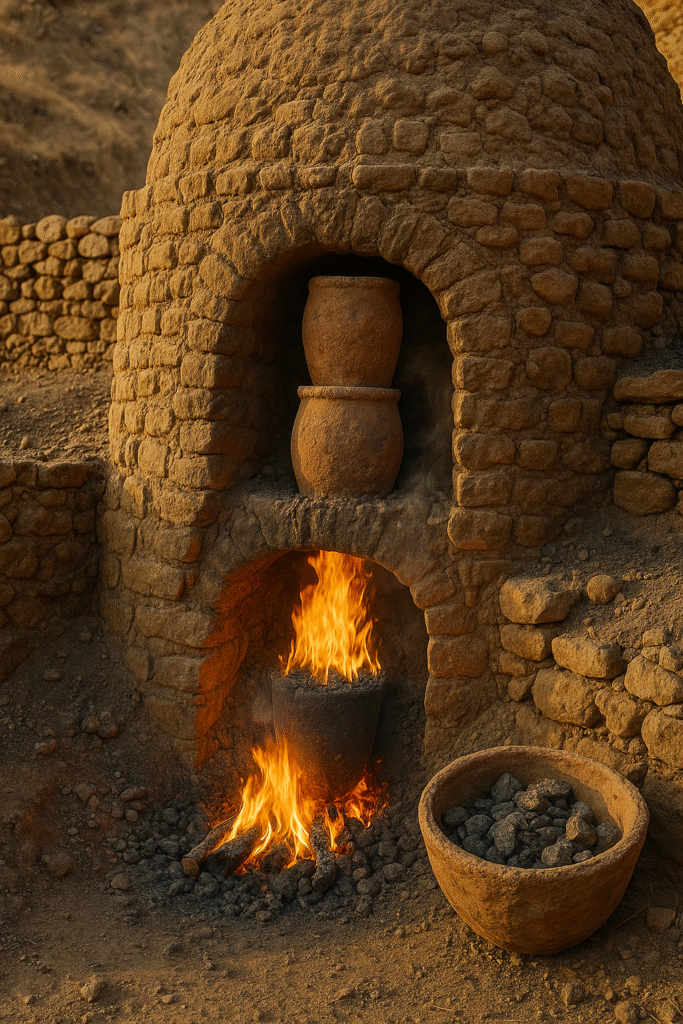
Here’s what makes Zawar an engineering marvel centuries ahead of its time:
- Clay retorts were packed with zinc ore and charcoal
- These vessels were stacked vertically in a kiln
- Fire below vaporized the zinc
- But instead of escaping, the vapor was forced downward
- In a lower sealed chamber, it cooled and condensed into metallic zinc
This method is now known as downward distillation — a process modern science recognizes and teaches.
But India executed it without steel, sensors, or simulations — only clay, fire, and applied wisdom.
🌐 The World Took Centuries to Catch Up
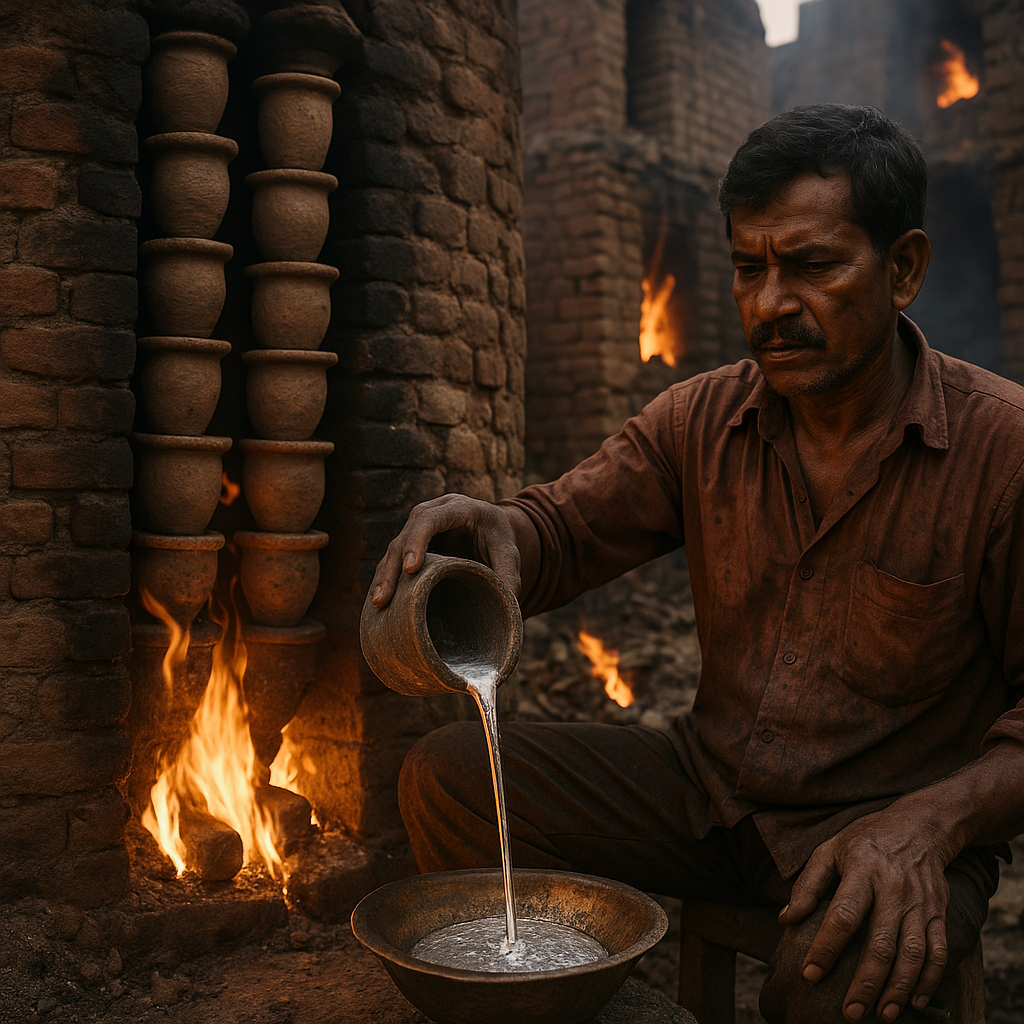
Europe eventually figured it out — but only 400–500 years later.
Until then, India was already:
- Extracting pure zinc
- Producing it in industrial quantities
- Trading it across regions
This wasn’t a village experiment. This was a chemical empire in action.
🧠 This Wasn’t Alchemy. This Was Engineering.
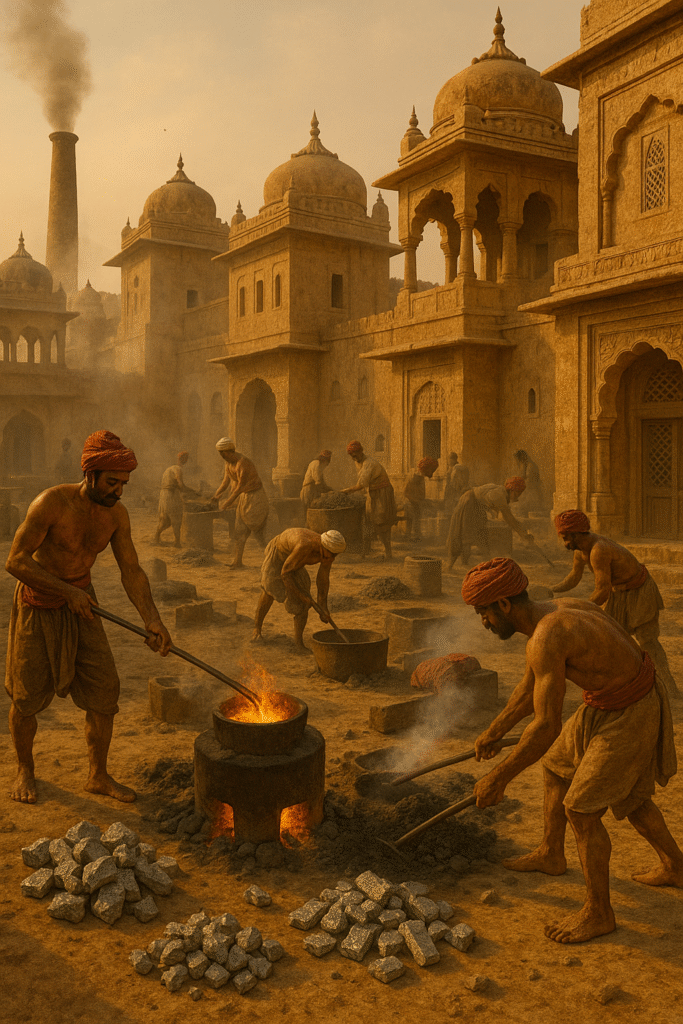
The West often dismissed ancient metallurgy as superstition.
But what Zawar proves is this: India’s metallurgists were not dabbling in magic — they were pioneers of chemical engineering, automation, and mass production, centuries before the rest of the world caught on.
🇮🇳 Conclusion: Zawar’s Flames May Have Faded, But Its Legacy Burns Bright
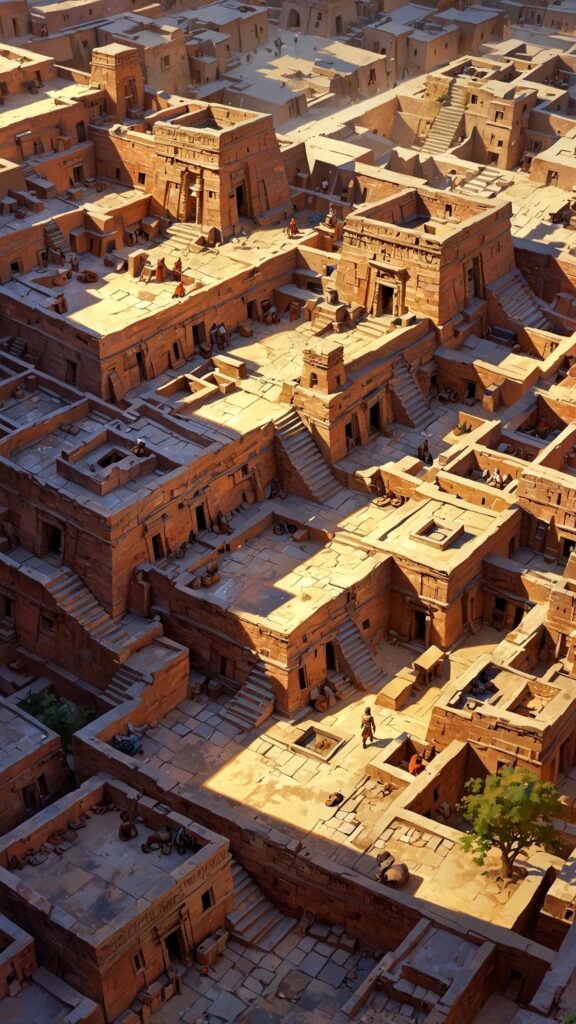
Zawar isn’t just an archaeological site. It’s a monument to Indian intellect, a symbol of how science can thrive without degrees — only with clarity of thought and courage to experiment.
Long before chemistry had labs, India had Zawar.
And long before the world found zinc, India had already bottled it.

